
In today’s rapidly evolving professional landscape, coaching has emerged as a powerful tool for personal and professional development. As the demand for coaching continues to grow, it becomes imperative for coaches and aspiring coaches to hone their competencies. Creating awareness in coaching competencies is more than acquiring skills; it’s about understanding the essence of coaching and its transformative potential.
What Are Coaching Competencies?
Coaching competencies are the essential skills, knowledge, and attitudes that coaches need to effectively support their clients in achieving their goals and aspirations. These competencies serve as a universal foundation for all coaching styles. The International Coach Federation (ICF) has outlined a set of core competencies that provide a comprehensive framework for coaching excellence. Let’s delve into some of the skills within these competencies and explore how they contribute to creating awareness.
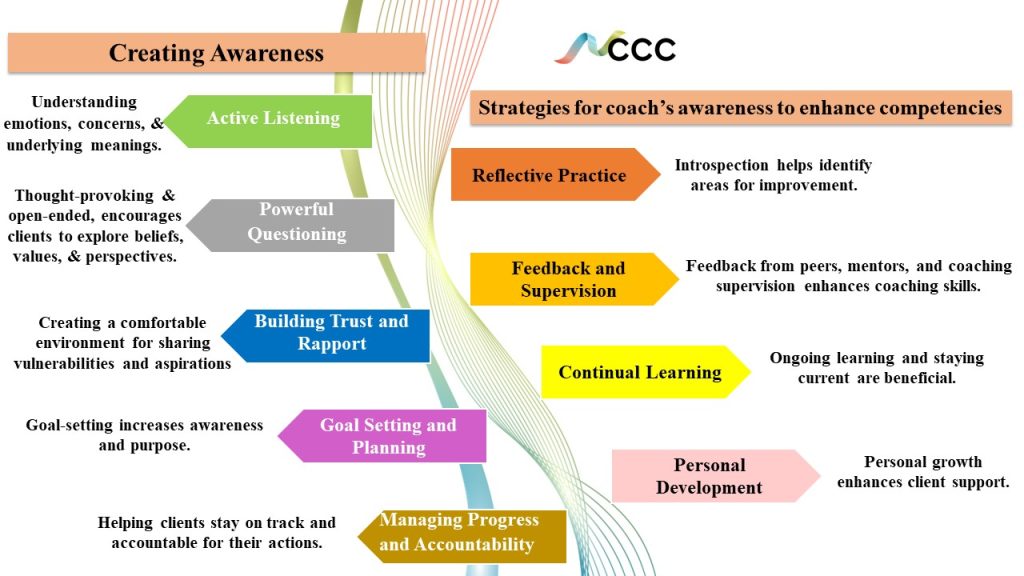
Active Listening
Active listening is at the heart of coaching. It involves hearing words and also understanding the emotions, concerns, and underlying meanings behind what the client is saying. Coaches who excel in active listening create a safe and supportive space for their clients to express themselves fully. By being fully present and engaged, coaches help clients gain awareness of their thoughts and feelings, fostering self-discovery.
Powerful Questioning
Powerful questions are thought-provoking and open-ended. They encourage clients to explore their beliefs, values, and perspectives. Through skilled questioning, coaches guide clients to uncover insights and solutions within themselves. This process of self-inquiry raises awareness of potential paths forward and enhances the client’s decision-making capabilities.
Building Trust and Rapport
Establishing a trusting and intimate coaching relationship is crucial. Coaches create an environment where clients feel comfortable sharing their vulnerabilities and aspirations. Building trust leads to open communication and a deeper level of self-awareness for clients as they explore their challenges and goals within a supportive partnership.
Goal Setting and Planning
Coaching is goal-oriented, and setting clear, achievable objectives is fundamental. Coaches help clients define their goals, break them down into actionable steps, and develop a concrete plan for attaining them. This process of goal setting increases awareness of desired outcomes and also instills a sense of purpose and direction.
Managing Progress and Accountability
Coaches play a pivotal role in helping clients stay on track and accountable for their actions. By regularly reviewing progress and adjusting plans as appropriate, coaches empower clients to remain aware of their journey’s evolution. This ongoing reflection fosters adaptability and self-awareness, leading to better outcomes.
Strategies to cultivate awareness in coaching competencies:
Creating awareness in coaching competencies goes beyond mastering specific skills; it involves embodying the coaching mindset. Coaches continuously reflect on their own beliefs, biases, and behaviors to provide the most effective support for their clients. Self-awareness is the cornerstone upon which all coaching competencies are built.
Here are some strategies to cultivate awareness for coaches in support of their coaching competencies:
1.Reflective Practice: Coaches can engage in regular self-reflection, seeking to understand their own motivations and reactions during coaching sessions. This introspection helps coaches identify areas for improvement.
- Feedback and Supervision: Seeking feedback from peers and mentors can provide valuable insights into one’s coaching style and areas of growth. Supervision sessions with experienced coaches can also enhance awareness and competence.
- Continual Learning: The field of coaching is ever evolving. Coaches benefit from investing in ongoing education, attending workshops, and staying updated with the latest trends and research in coaching.
- Personal Development: Coaches also engage in their personal development journeys, as gaining self-awareness in their personal lives significantly enhances their skills to support clients in their professional and personal growth.
In conclusion, creating awareness for clients and coaches is a journey of self-discovery and professional growth. Coaches who commit to developing these competencies become more effective in their practice and also contribute to the positive transformation of their clients’ lives. Aspiring coaches benefit by embracing ICF’s core competencies as the foundation for their coaching journey, knowing that the power of coaching lies in its power to create profound awareness and lasting change.