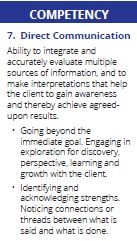
Direct communication requires accurately evaluating and interpreting multiple sources of information. For example, an awareness of the client’s intended meaning, learning style, and personality is …
Evaluating CC7 Direct Communication

Center for Coaching Certification
Direct communication requires accurately evaluating and interpreting multiple sources of information. For example, an awareness of the client’s intended meaning, learning style, and personality is …
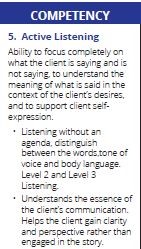
Active listening is focusing completely on both what a client is saying and is not saying within the context of who they are to gain …
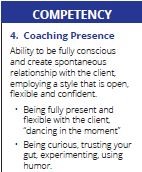
Being open, flexible, and confident while fully conscious of the client is the coaching competency of presence. It includes being curious, trusting your instincts, experimenting, …
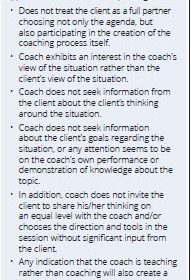
Because the number one indicator of success in a coaching relationship is the rapport between the coach and the client, this coaching competency of establishing …
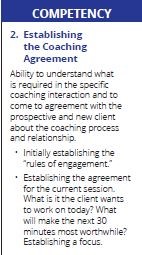
Establishing the coaching agreement includes both an initial agreement for the coaching relationship and an agreement at the beginning of each session as to what …
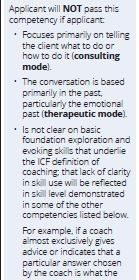
In the ICF Comparison Table, the only competency that is not directly evaluated during an oral exam for credentialing is Ethics and Standards. At the …
The ICF published a comparison table on their website that provides excellent awareness of the coaching competencies from the perspective of skill development. Specifically, it …

Learning and developing coaching competencies is foundational for being a coach. On it’s surface, it demonstrates a respect for the work and for professionalism. More …

After learning coaching competencies, planning for continuing education supports retaining, applying, and enhancing what you learned. Training reinforces what you are doing right, reminds you …

One fun, inexpensive way to further develop coaching competencies is self-directed study. There are a myriad of resources available to support ongoing learning. Coaching is …