
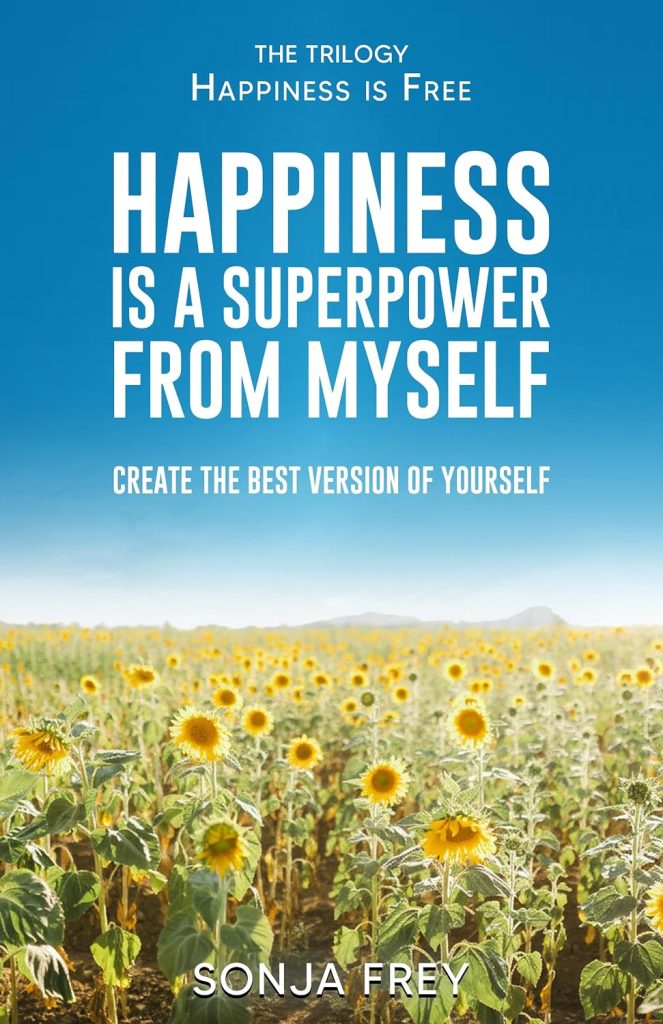
I reviewed Happiness is a Superpower from Myself by Sonja Frey. The book is a self-help and personal growth guide that blends psychology, trauma recovery, mindfulness, spirituality, neuroscience, relationships, and personal responsibility. The author draws heavily on thinkers such as Gabor Maté, Bessel van der Kolk, Stephen Porges, Thich Nhat Hanh, James Doty, and others.
Executive Summary
The book’s core message is that happiness is not something external that happens to us. It is created through self-awareness, emotional regulation, healing old wounds, accepting ourselves, and taking responsibility for our lives. The author’s framework can be remembered through the acronym BEST:
- B = Brain Science
- E = Emotional Regulation
- S = Speak Your Truth
- T = Trauma Work
According to the author, these four areas are the foundation for personal freedom and happiness.
What Readers Will Likely Find Interesting
- Trauma’s Influence on Everyday Life
One of the strongest themes is that many adult behaviors, fears, emotional reactions, and physical symptoms originate from unresolved childhood experiences. The author explains trauma not as what happened to you, but what happened inside you and how your body stored it.
To the author this provides an explanation for recurring emotional patterns, anxiety, relationship problems, and stress reactions.
- The Mind-Body Connection
The book repeatedly argues that emotions and stress are stored in the body and can contribute to physical symptoms, chronic stress, and illness. The author suggests using breathwork and yoga as two possible solutions to resolve this stress.
- Neuroplasticity and Rewiring the Brain
The author explains how repeated thoughts and behaviors can reshape the brain–
“Change your mind, change your life.”
This sends readers a hopeful message that personality patterns are not fixed and can be changed through practice and awareness.
- Internal Family Systems (IFS)
The chapter on Internal Family Systems introduces the idea that each person contains multiple “parts”:
- The critic
- The people-pleaser
- The protector
- The inner child
Rather than fighting these parts, readers are encouraged to understand them—one ”wont be liked by everyone”.
- Practical Emotional Regulation Strategies
The author offers useful concepts such as:
- Distinguishing emotions from thoughts
- Recognizing emotional triggers
- Understanding fear as a signal rather than an enemy and the freedom that comes with recognizing the constraints of fear
- Separating present reality from past wounds
- Being kind to yourself
These tools make the book feel practical rather than purely theoretical.
- Gratitude as a Daily Practice
The author describes simple daily exercises that can improve mood and attention.
- Authenticity and Speaking the Truth
A recurring message is that healing comes from being authentic rather than trying to please everyone. Always choose truth.
What Some Readers May Not Like:
- Heavy Spiritual Content
Although the book includes psychology and neuroscience, it also contains significant spiritual themes including manifestation.
Readers looking for strictly evidence-based psychology may find these sections less convincing.
- Repetition of Core Ideas
Several themes repeat throughout the book:
Readers may feel the book could have been shorter and more tightly edited.
- Strong Claims About Healing
The book suggests links between emotional states and physical illnesses, including references to cancer recovery and chronic disease. Readers may feel these claims go beyond what is firmly supported by scientific evidence.
- Less Focus on Practical Step-by-Step Plans
The advice is often inspirational rather than structured. Readers seeking detailed or measurable action plans may find the guidance somewhat abstract.
Biggest Takeaways
The best messages of the book are:
- Accept yourself for who you are.
- Address unresolved trauma.
- Learn emotional regulation.
- Take responsibility for your actions.
- Speak your truth.
- Train your brain intentionally.
- Practice gratitude daily.
- Embrace imperfections.
- Choose authenticity over people-pleasing.
- Happiness comes from inner freedom, not external success.
Overall Assessment
Who will love it:
- People interested in healing, self-development, trauma recovery, mindfulness, and spirituality
- Readers seeking encouragement and inspiration
Who may not enjoy it:
- Readers wanting highly scientific, evidence-only psychology
- Skeptics of manifestation and spiritual experiences
- Readers looking for rigorous clinical frameworks rather than personal reflections
The book’s greatest strength is its compassionate, hopeful message that people can heal, grow, and reshape their lives. It is a very short and easy read but also gets very repetitive. One of its weaknesses is its reliance on quoting other experts/psychologists almost assuming the reader is aware of their body of work. The references are not sporadic but often occur too often and without much detail that this reader found distracting. Not this reader’s cup of tea but even so there is a positivity to the book that is refreshing and several takeaways that may be worth giving a try!
Consider this a resource for yourself personally as well as insight for working with coaching clients.
To become a coach, visit https://www.CoachCert.com
To engage a coach or coaches, visit https://www.Coach-123.com