The coaching process can be focused on a specific purpose or encompass the whole person, and ideally is balanced. Sometimes a coach talks with the …
Co-creating the coaching process


Center for Coaching Certification
The coaching process can be focused on a specific purpose or encompass the whole person, and ideally is balanced. Sometimes a coach talks with the …

In a quality coach training program, coaches learn to identify different personalities in the moment and learn to identify different learning styles. This is then …

A coaching relationship is geared specifically to an individual client. To maximize the process for that person, a coach co-creates the relationship, process, and even …
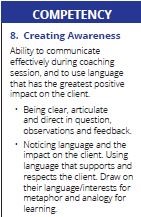
Creating awareness involves using the direct communication and powerful questioning competencies. At a beginning level of competency, it means generating awareness of new techniques or …
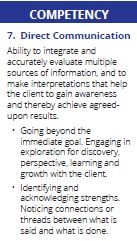
Direct communication requires accurately evaluating and interpreting multiple sources of information. For example, an awareness of the client’s intended meaning, learning style, and personality is …
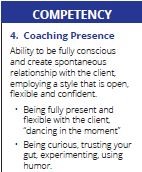
Being open, flexible, and confident while fully conscious of the client is the coaching competency of presence. It includes being curious, trusting your instincts, experimenting, …
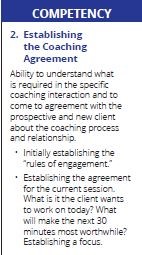
Establishing the coaching agreement includes both an initial agreement for the coaching relationship and an agreement at the beginning of each session as to what …
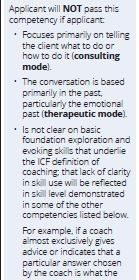
In the ICF Comparison Table, the only competency that is not directly evaluated during an oral exam for credentialing is Ethics and Standards. At the …

Learning and developing coaching competencies is foundational for being a coach. On it’s surface, it demonstrates a respect for the work and for professionalism. More …

After learning coaching competencies, planning for continuing education supports retaining, applying, and enhancing what you learned. Training reinforces what you are doing right, reminds you …