
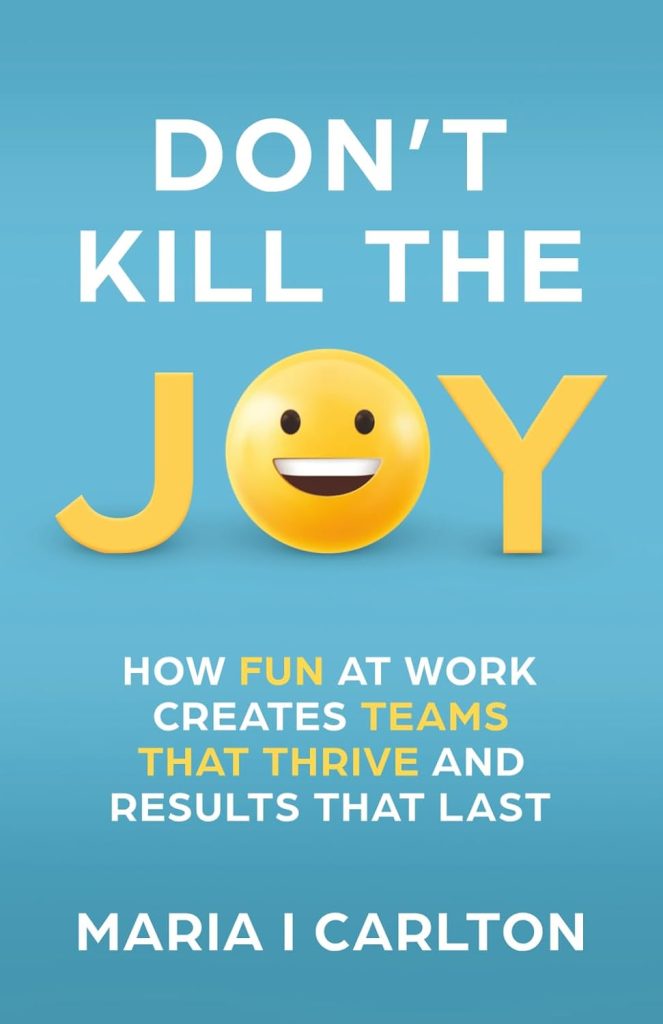
In Don’t Kill the Joy, Maria Carlton explores the growing crisis of burnout, disengagement, and emotional exhaustion in modern workplaces. Drawing on personal experience, research, and professional coaching insights, Carlton argues that joy and fun are not distractions from productivity but essential elements of healthy, high-performing organizations. The book challenges traditional beliefs about professionalism and success, proposing that play, laughter, and human connection are powerful tools for sustainable results.
This book is a guide for leaders and employees to build sustainable, joyful, and psychologically safe workplaces. It argues that incorporating fun and fostering positive connections drives long-term, high-performing, and meaningful business results. It clearly shows that fun and playfulness are not distractions but essential elements that alleviate stress and strengthen team bonds.
The book is organized into three main sections.
Part I: The Joy Gap – How We Got Here
Carlton begins by examining how modern work culture has become dominated by stress, overwork, and unrealistic expectations. She discusses concepts such as burnout, emotional labor, hidden work, and the myth of the “super worker” who can do everything flawlessly. Through personal stories, including her own experience with workplace trauma and a stress-related heart attack, Carlton illustrates how chronic stress harms both individuals and organizations. This section explains why many workplaces feel joyless and why employees struggle to disengage from work even outside office hours.
Part II: Reclaiming Joy – How We Can Fix It
In the second section, Carlton makes the case for fun as a legitimate business strategy. She explains how play improves creativity, trust, engagement, and innovation. Topics include finding personal purpose (ikigai), building strong workplace relationships, playful leadership, and using humor appropriately. Carlton emphasizes that joyful workplaces do not mean avoiding accountability; instead, they foster psychological safety and collaboration that lead to better performance.
Part III: Legacy of Joy – Sustaining What Matters
The final section focuses on sustaining joy long-term. Carlton discusses how joy extends beyond the workplace into personal wellbeing, motivation, learning, and leadership legacy. She stresses that joy must be intentionally supported through culture, feedback systems, and leadership behavior and not treated as a short-term morale booster. The book concludes by reinforcing that organizations that invest in joy create healthier people and more resilient results.
Several major themes run throughout the book:
- Burnout is systemic, not an individual failure.
- Joy and fun are strategic, not frivolous.
- Emotional labor and hidden work must be acknowledged.
- Leadership sets the emotional tone of the workplace.
- Sustainable success requires human-centered cultures.
Key aspects of the book include:
- Purpose Beyond Results: The book challenges organizations to move beyond short-term fixes and focus on creating lasting, positive, and supportive environments.
- Actionable Strategies: This book offers practical advice for fostering engagement, including celebrating successes, authentic communication, and building strong relationships.
- Combating Burnout: The book emphasizes that “fun” is not just frivolous, but a necessary component for reducing stress, increasing motivation, and fostering creativity.
- Building a Legacy: This book encourages leaders to see their role as “legacy builders,” creating a culture where employees find fulfillment.
- Well-being Focus: The book highlights the importance of integrating employee wellness and genuine joy into the workplace culture, which contributes to higher employee retention and performance.
Don’t Kill the Joy is geared toward leaders and team members aiming to create a thriving work environment rather than just a productive one. It offers a guide for leaders to build sustainable, joyful work environments by combating modern “hustle culture”. The book focuses on creating psychological safety, fostering connection, and driving long-term results through intentional, empathetic, and fun workplace design.
Maria Carlton writes from the perspective of a leadership coach and HR professional with decades of experience. Her purpose is to shift how leaders and organizations think about work culture. Rather than encouraging employees to simply become more resilient, she calls on organizations to redesign environments that help people to thrive. Her use of personal storytelling adds credibility and emotional depth to her argument.
Don’t Kill the Joy is a persuasive and accessible book that blends research with real-world experience. Its strength lies in reframing joy as a serious leadership responsibility rather than a “nice-to-have”. Carlton successfully demonstrates that joy improves both employee wellbeing and business outcomes. This book is especially valuable for leaders, managers, HR professionals, and anyone struggling with workplace burnout. Overall, Don’t Kill the Joy delivers a compelling message: when organizations protect joy, performance follows.