
Book Review by Dr. Guray Taysever https://www.linkedin.com/in/excoach/
Overview
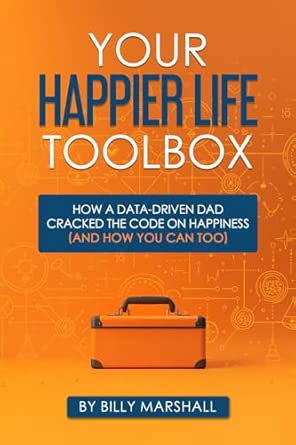
I found Your Happier Life Toolbox to be a refreshing guide toward realistically understanding happiness. Billy Marshall is not your stereotypical self-help author. He’s a father who, with a secure job in hand, a family that loves him, and a comfortable home, often found himself wondering why he wasn’t genuinely happy. Rather than ignore the feeling, he chose to dig in. Over time, he read hundreds of studies, listened to podcasts like The Happiness Lab, and experimented with his own routines. The result is this book, complete with tools he tested himself and strategies rooted in research.
Chapter 1: From Negativity Bias to Intentional Joy
This chapter is all about shifting your perspective from focusing on what’s wrong to noticing what’s good. Marshall introduces practical ways to build gratitude into everyday life, helping readers spot and appreciate positive moments. He encourages staying optimistic even when life feels tough and teaches how to reframe negative thoughts so they don’t take over. The chapter also shows how to savor happy experiences and incorporate humor and laughter, even during stressful times. The overall goal is to train your mind to notice joy more often and make it a regular part of life.
Chapter 2: Becoming the CEO of Your Own Mind
Here, Marshall shares strategies for gaining more control over your thoughts and emotions. Mindfulness meditation is suggested to help you stay present, while deep breathing exercises can naturally calm the body. Naming your emotions is another simple yet powerful tool to reduce their intensity. The chapter also explores the importance of awe and wonder, helping readers connect with something bigger than themselves. The focus is on taking charge of your mental space so that you can respond thoughtfully rather than react automatically.
Chapter 3: Building Unshakeable Inner Strength
This chapter focuses on resilience and self-empowerment. Marshall encourages practicing self-compassion, treating yourself with the same kindness you would offer a friend. He also explains how to use your natural character strengths intentionally, adopt a growth mindset by seeing challenges as opportunities, and accept what you cannot change. By concentrating on what you can influence, readers can cultivate inner stability and confidence that helps them navigate life’s ups and downs more effectively.
Chapter 4: Finding Your Something Bigger: Connecting to Something Greater Than Yourself
The final chapter explores how having a sense of purpose or connection to something larger can enhance overall happiness. Marshall emphasizes that the tools in the book work together like instruments in an orchestra; their combined effect creates deeper well-being. Even when life is messy or unpredictable, these strategies can help readers find calm, enjoy small moments of joy, and laugh genuinely. Marshall reminds readers that happiness isn’t a far-off goal; it’s something that can be experienced in the present, even amid life’s imperfections. The chapter closes with an inviting, encouraging tone, prompting readers to approach this mental journey with curiosity, reflection, and a sense of play.
The Good
Evidence-Based Tools
One of the things that I liked most was that Marshall doesn’t rely on motivational clichés. Each strategy is grounded in research, which makes me feel I can trust the advice.
Easy to Apply
It really is practical. You don’t necessarily have to read the whole book before you try something. Even picking a couple of the tools can make all the difference.
Relatable Voice
I was hearing from someone who really understands the struggles of everyday life. Marshall shares his successes and failures openly, so the guidance does feel very genuine.
Covers a lot of ground.
The book covers mindset, habits, and relationships, whatever one’s situation may be – parents, a professional, or at least someone trying to make life easier day by day – there is something in it that will help.
Encourages Reflection
Many of these tools invite you to reflect on your patterns and values as a way to turn insights into real change.
The Bad
Can Be Overwhelming
With 42 tools, not to mention dozens of myths, it is sometimes difficult to know where to start. The process is less overwhelming when focusing on only a few at a time.
Takes effort
This isn’t a magic solution. The strategies only work if you try them consistently. Some tools are brief. While these were groundbreaking insights, supported by research, it did feel in some places that the depth could have gone further. For readers who want extended case studies, they might be left wanting more.
Not Instant
Happiness is gradual. If you’re looking for a quick fix, this book may feel slow; the changes it encourages, however, are more lasting.
Repetitive at Times
Because each tool is in a similar format – science, story, action – the structure feels repetitive when reading multiple tools one after another.
Limited Cultural Examples
Most stories and examples present Western experiences. Readers of other backgrounds might not see themselves reflected in every scenario.
Conclusion
Overall, I found Your Happier Life Toolbox to be both practical and encouraging. Marshall writes in an honest and approachable manner, and the tools are actionable without being oversimplified. Even trying a few strategies can lead to noticeable improvements in your daily habits, mindset, and relationships. It is not a quick fix, but for anyone willing to experiment and reflect, this book is a valuable companion in building lasting happiness.